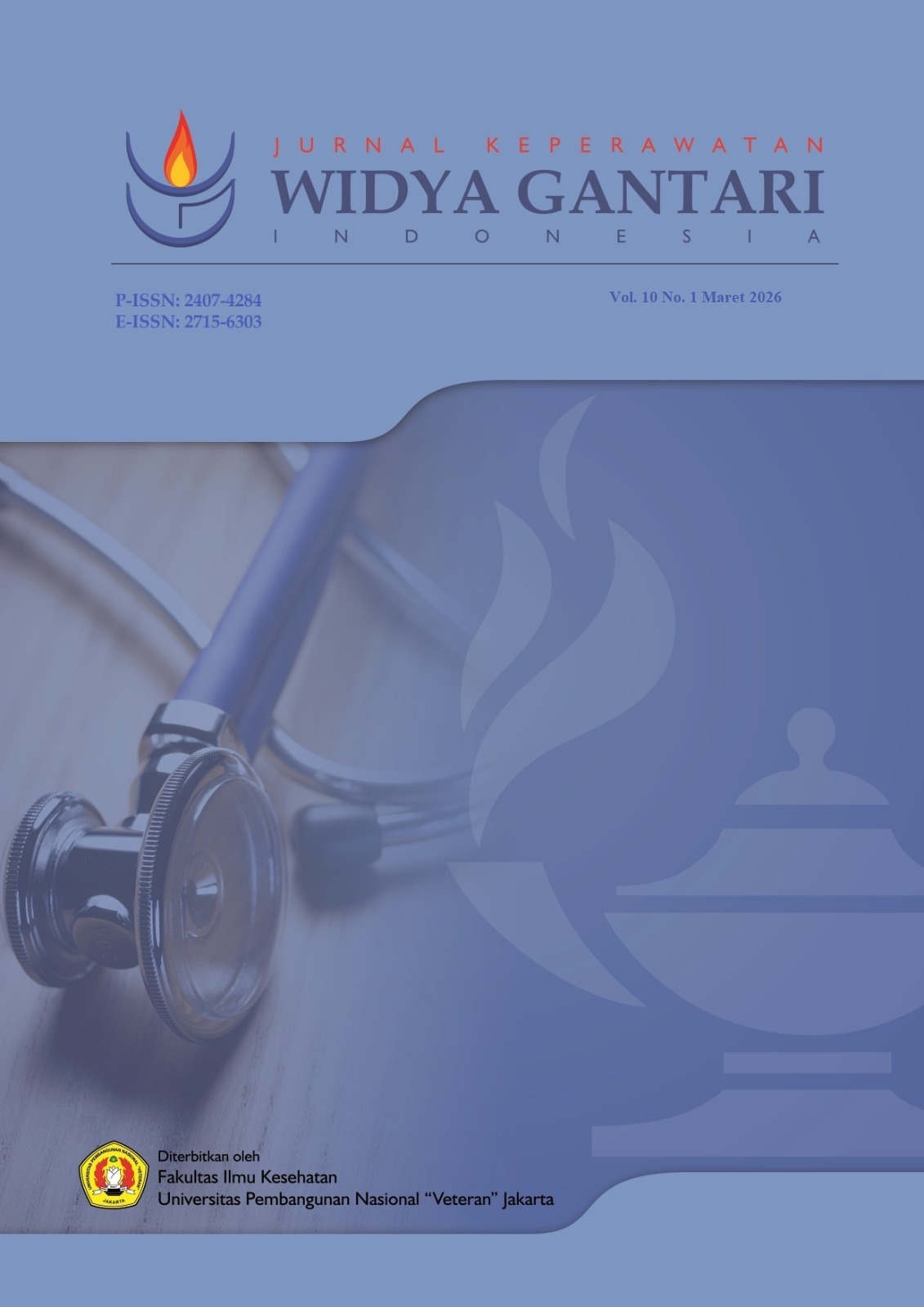
APLIKASI TRANSITION THEORY TERHADAP ASUHAN KEPERAWATAN PASIEN DIABETES MELLITUS DALAM PERENCANAAN PULANG MODEL LIMA LINK-30
Abstract
Afaf Ibrahim Meleis's Transition Theory explains responses to health and illness. Transition theory provides a framework for understanding the changes patients experience when transitioning from health to illness and vice versa. This theory provides insights into physical, psychological, and social adjustments. The situational transition from hospital to home requires good discharge planning. This article discusses the application of transition theory to the LIMALink-30 model of discharge planning for patients with diabetes mellitus. The LIMALink-30 model emphasizes patient and family involvement in discharge planning readiness and strengthens motivational interventions to reduce hospital readmission. This article integrates the concepts of the nature of transition, transition conditions and response patterns into a holistic discharge planning. Integrating this model with transition theory helps nurses understand patients' needs in undergoing home care. These findings provide a framework for nurses to manage patients with diabetes mellitus from the time they are admitted to the hospital until they begin treatment at home. This model emphasizes the importance of a well-coordinated care plan. Coordination includes education, emotional support, and ongoing monitoring. The end result is increased patient adherence to treatment and reduced readmission.
Downloads
Published
Issue
Section
License
Copyright (c) 2026 Aulia Finaryati, Herlina, Diah Ratnawati

This work is licensed under a Creative Commons Attribution-NonCommercial 4.0 International License.
Authors who publish Jurnal Keperawatan Widya Gantari Indonesia (JKWGI) agree to the following terms:
The Authors submitting a manuscript do so on the understanding that if accepted for publication, authors are copyright holder of the publish articles with the work simultaneously licensed under a Creative Commons Attribution-NonCommercial 4.0 International License (CC BY-NC 4.0). that allows others to share (copy and redistribute the material in any medium or format) and adapt (remix, transform, and build upon the material) the work for any purpose non commercially with an acknowledgment of the work's authorship and initial publication in Jurnal Keperawatan Widya Gantari Indonesia (JKWGI).
You are free to:
- Share — copy and redistribute the material in any medium or format
- Adapt — remix, transform, and build upon the material
- The licensor cannot revoke these freedoms as long as you follow the license terms.
Under the following terms:
- Attribution — You must give appropriate credit , provide a link to the license, and indicate if changes were made . You may do so in any reasonable manner, but not in any way that suggests the licensor endorses you or your use.
- NonCommercial — You may not use the material for commercial purposes .
- No additional restrictions — You may not apply legal terms or technological measures that legally restrict others from doing anything the license permits.
Notices:
You do not have to comply with the license for elements of the material in the public domain or where your use is permitted by an applicable exception or limitation .
No warranties are given. The license may not give you all of the permissions necessary for your intended use. For example, other rights such as publicity, privacy, or moral rights may limit how you use the material.




 This journal is published under the terms of the